
Property Management Business: How It Works, What It Takes, and How to Build One in 2026

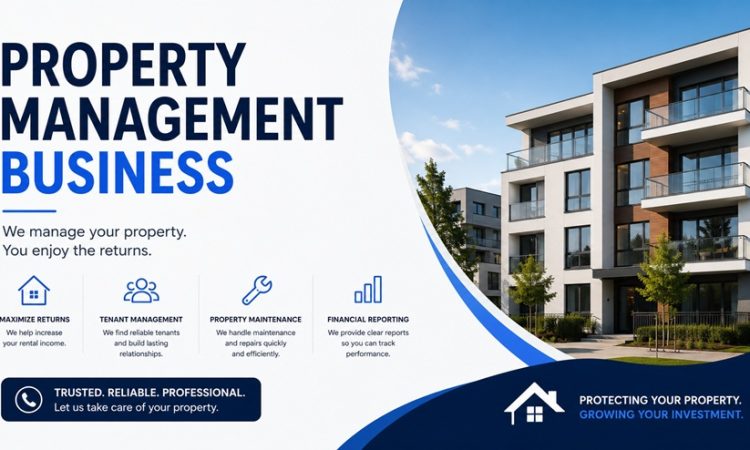
The property management industry is one of the most durable business models in real estate, and in 2026 it is also one of the most active. With the U.S. market generating $136.9 billion in annual revenue, approximately 330,400 property management companies operating nationwide, and 51 percent of the country’s 9.7 million rental property owners using a professional property manager, the industry serves an enormous and consistently replenished base of clients. Rental demand remains high, institutional landlords are pulling back from certain markets, and the gap between what property owners need and what they have time to manage themselves keeps widening. For entrepreneurs with the right skill set and operational discipline, building a property management business in 2026 is a genuinely compelling opportunity.
What a Property Management Business Actually Does
Before getting into how to build one, it is worth being precise about what a property management company actually provides, because the answer is broader than most people assume.
A property management company acts as the licensed intermediary between property owners and tenants. The owner retains legal ownership of the property and the investment returns it generates. The management company handles every operational dimension of that investment on the owner’s behalf, in exchange for a fee.
The core services a property management business typically provides include tenant placement, which encompasses marketing the rental across appropriate channels, conducting showings, screening applicants through credit checks, background checks, and income verification, and executing legally compliant lease agreements. Rent collection and financial reporting cover the consistent collection of monthly rent, disbursement to owners, handling of late payments, and production of regular financial statements. Maintenance coordination covers receiving repair requests from tenants, dispatching qualified vendors, overseeing work quality, and managing the owner’s maintenance budget. Lease renewals, inspections, and move-out processing round out the tenant lifecycle management function. For owners with multiple properties or those who live far from their investment assets, the value of having a professional managing these operations is immediate and measurable.
The Revenue Model: How Property Management Companies Make Money
Understanding the revenue structure of a property management business is foundational to building a profitable one. Most property management companies operate on a combination of base management fees and ancillary revenue streams that have grown significantly in importance in 2026.
Base management fees for residential properties typically run between 8 and 12 percent of monthly collected rent, varying by market, portfolio size, and the scope of services included. Commercial property management fees generally run lower, between 3 and 6 percent of gross collected rents, reflecting the different service requirements and longer lease terms in commercial portfolios. The average property management company manages anywhere from 100 to 500 units, and at a median fee of 10 percent on an average monthly rent of $1,500, a 300-unit portfolio generates approximately $540,000 in annual management fee revenue before expenses.
Leasing fees, charged when a vacant unit is filled with a new tenant, typically run the equivalent of one half to one full month’s rent per placement. Lease renewal fees, charged when an existing tenant renews, provide a smaller but consistent additional revenue stream. Maintenance coordination fees, charged as a percentage or flat fee on maintenance work orders, compensate the company for managing vendor relationships and overseeing repairs.
The fastest-growing revenue stream for property management companies in 2026 is resident benefits packages, which bundle services like renters insurance, credit building tools, identity protection, air filter delivery, and pest control into a monthly fee paid by residents alongside rent. According to a National Rental Home Council study, operators running resident benefits packages averaged $156 per home in gross profit annually before operational costs, and the program itself reduced operational costs because residents engaged more consistently with maintenance responsibilities. This model creates value for residents, generates meaningful ancillary revenue for the management company, and improves asset quality for property owners simultaneously.
Licensing and Legal Requirements
The property management business is regulated at the state level, and compliance with applicable licensing requirements is non-negotiable. In most states, managing property for third parties, which includes collecting rent and negotiating leases on behalf of owners, requires holding a Real Estate Broker’s license. Some states allow a property management license as a distinct credential, and a small number have no specific licensing requirement beyond a general business license, but those are exceptions.
Before establishing a property management company, prospective operators should research the specific requirements in their state through the relevant real estate commission or department of licensing. Beyond the broker’s license, most professional property management companies pursue membership in the National Association of Residential Property Managers, which offers the Residential Management Professional and Master Property Manager designations. These credentials are not legally required but signal professional standards to prospective owner clients and are increasingly expected by larger or more sophisticated investors.
Insurance is equally non-negotiable. Property management companies need general liability insurance, errors and omissions coverage to protect against claims arising from management decisions, and appropriate workers compensation if they employ staff directly. Fidelity bonding, which protects owner clients against employee dishonesty in handling funds, is also standard practice and often required by state regulations governing trust account management.
Technology: The Operating Infrastructure Every Property Management Business Needs
The property management business has become increasingly technology-driven, and the gap between operators who use the right software stack and those who rely on spreadsheets and manual processes is widening rapidly. As Buildium’s 2026 State of the Property Management Industry Report indicates, 75 percent of property managers plan to expand their portfolios in 2026, and the ability to scale efficiently depends directly on having automation-capable operational infrastructure in place before growth demands it.
Property management software is the operational core. Leading platforms including Buildium, AppFolio, Yardi Breeze, DoorLoop, and Rentvine automate rent collection, maintenance request routing, lease renewals, owner financial reporting, and tenant communications from a centralized dashboard. Pricing in 2026 follows a per-unit model for most mid-sized operators, generally running $1 to $5 per unit per month with minimum monthly fees between $100 and $300. For an operator managing 200 units, that means a software cost of $200 to $1,000 per month, which is a modest expense relative to the operational efficiency it creates. If automation eliminates one full-time administrative role, the savings of approximately $45,000 per year dwarf the software cost many times over.
AI has moved meaningfully into property management workflows in 2026. Leasing assistants powered by AI now handle initial inquiry responses, schedule showings, and conduct preliminary screening conversations, reducing the time between a prospective tenant’s first contact and an application submission. Maintenance triage tools route repair requests to the appropriate vendor automatically based on the type of issue reported. These capabilities reduce response times and help operators maintain fair-housing compliance by ensuring consistent, documented interaction protocols.
Building a Portfolio: The Growth Engine of the Business
The fundamental growth metric in property management is doors under management, and building a sustainable portfolio requires a deliberate strategy for attracting and retaining property owner clients rather than simply waiting for referrals.
Referral networks remain the most productive lead source for most property management companies. Building relationships with residential real estate agents, mortgage brokers, real estate attorneys, CPAs who serve investor clients, and HOA boards creates a consistent pipeline of owners who are actively looking for management support. According to Buildium’s survey, encouraging clients to provide referrals was the most successful growth tactic for property managers in 2025. Incentivizing referrals through service discounts or recognition programs formalizes what would otherwise be an informal and inconsistent process.
Digital marketing and search engine optimization have become essential for property management companies that want to generate inbound leads from owners actively searching for management services online. A well-built website that ranks for local search terms like “property management company in” followed by your city, combined with a strong Google Business Profile and a consistent content strategy, can generate a steady flow of qualified owner leads without relying entirely on relationship development.
Market specialization is a growth strategy that consistently produces better outcomes than trying to serve every property type and owner profile equally. Operators who focus on single-family residential, or on a specific class of multifamily properties, or on short-term vacation rentals, develop deeper operational expertise, more relevant vendor networks, and clearer positioning that makes them easier to choose over a generalist competitor.
The Operational Reality: Challenges That New Operators Underestimate
Building a property management business is genuinely rewarding, and it is also operationally demanding in ways that deserve honest acknowledgment. Managing properties means managing people, specifically tenants who have urgent maintenance needs, owners who have performance expectations, and vendors who have their own scheduling and quality variables. Communication, responsiveness, and conflict resolution are skills that matter as much as property-specific knowledge.
Landlord-tenant law varies by state, and in many markets it changes frequently. Staying current on fair housing regulations, required notice periods, eviction procedures, security deposit handling rules, and habitability standards is an ongoing professional responsibility. Violations, even unintentional ones, carry significant legal and financial exposure. Most serious property management operators maintain relationships with real estate attorneys who specialize in landlord-tenant law and review their standard lease agreements and operating procedures regularly.
According to Buildium’s 2026 industry survey, 93 percent of property managers saw expense increases over the past year, reflecting the ongoing pressure of rising labor costs, insurance premiums, software fees, and vendor rates. Building a property management business with healthy margins requires continuous attention to both fee structure and operational efficiency rather than simply adding doors without addressing the cost per door.
Why the Opportunity Remains Strong
The structural fundamentals behind the property management business are durable. Rental housing demand in the United States remains structurally undersupplied, and the challenges of homeownership affordability continue to push more households into long-term renting. Institutional investors who acquired large single-family rental portfolios during the pandemic period are actively seeking professional management. The aging of the investor population means more owners who want passive income without hands-on involvement, creating steady demand for professional management services.
The operators who build the most successful property management businesses in 2026 are those who combine professional credentials and legal compliance with genuine operational systems, thoughtful technology adoption, and a client communication standard that makes owners feel their assets are genuinely cared for. In an industry where reputation drives referrals and referrals drive growth, the quality of the service delivered to every owner and every tenant on every day is the most durable competitive advantage available.