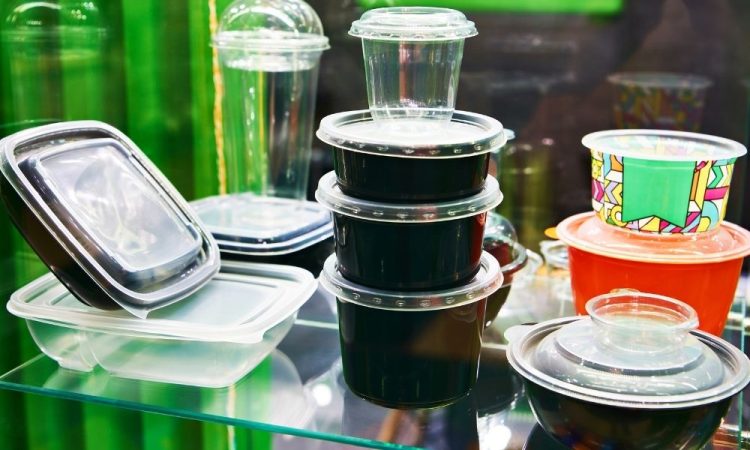
Plastik packaging makanan have become the backbone of Malaysia’s food industry, a dependency so complete that the nation now generates over 523,000 metric tonnes of domestic plastic packaging annually, yet the government’s own statistics reveal a system failing on nearly every measure it set for itself. This is not a story of inevitable progress or unfortunate side effects. It is a story of policy contradictions, regulatory gaps, and a food service infrastructure built on materials whose true costs are only now becoming impossible to ignore.
The Documentary Record
The Food Act 1983 and Food Regulations 1985 established Malaysia’s framework for food packaging safety. Part VI mandates that packaging materials must not render food injurious to human health or contribute to its deterioration. The language suggests comprehensive protection. The reality proves more selective.
Key regulatory provisions include:
- Regulation 27A explicitly prohibits Bisphenol A in feeding bottles only, stating “feeding bottles must not contain Bisphenol A (BPA)”
- The vast majority of plastik packaging makanan used across hawker stalls and night markets remains unaddressed by specific chemical restrictions
- Proposed Draft New Regulation 27B would establish migration limits for metals and substances including acrylonitrile, vinyl chloride, and formaldehyde
- The draft remains proposed, not implemented
Malaysia’s National Strategic Plan for Solid Waste Management set ambitious 2020 targets: divert 40% of waste from landfills and achieve 22% recycling rates. The actual results tell a different story. Latest government data documents nearly 90% of solid waste disposed in sanitary landfills, with only 10.5% recycled. The targets were not merely missed; they were missed by margins suggesting fundamental miscalculation about either the scale of the challenge or the adequacy of resources deployed against it.
The Pattern of Exemptions
In 2011, the Ministry of Domestic Trade Cooperatives and Consumerism initiated the No Plastic Bag Day Campaign, subsequently strengthening it with a 20 sen levy per bag. Review of the implementing regulations reveals a significant carve-out: small food businesses, including night and public markets, received exemption from the levy.
This exemption creates its own contradiction:
- Street food vendors and night market operators handle vast volumes of plastic packaging
- These venues account for substantial portions of single-use plastic distribution
- The locations where plastic usage concentrates most heavily received exemption from reduction policies
- Economic realities dictate that vendors operating on thin margins cannot absorb additional costs
A study examining street food hawkers found that 71.8% demonstrated good knowledge levels, scoring above 70% on assessments covering health hazards and environmental impacts. These findings undermine assumptions that vendor behaviour stems from ignorance. The hawkers understand the problems. Understanding, however, does not translate into alternatives when economic constraints and infrastructure limitations dictate available choices.

The Chemical Evidence Accumulates
Research conducted in Malaysian conditions documents specific pathways through which chemicals migrate from packaging to food:
- Heat accelerates transfer rates, particularly significant given Malaysia’s tropical climate and prevalence of hot meals
- Fatty and oily foods, characteristic of Malaysian cuisine, act as solvents enhancing chemical leaching
- Street vendors routinely serve steaming nasi lemak, curry, and soup in thin plastic bags that release residues upon contact with heat
- Repeated heating and cooling cycles in food storage intensify migration of compounds including BPA and phthalates
Studies published in peer-reviewed journals have detected microplastics in Malaysian drinking water, seafood, table salt, and agricultural soil. These fragments, less than five millimetres in size, result from the breakdown of larger plastic items including plastik packaging makanan. For a nation where seafood constitutes a dietary staple, the contamination of marine species represents not merely environmental degradation but direct human exposure through established food chains.
The Roadmap and Its Realities
Malaysia’s Roadmap to Zero Single-Use Plastics 2018-2030 established a timeline for elimination through phased implementation:
- Restrictions on plastic straws and bags in major cities
- Encouragement of biodegradable alternatives in food packaging
- Introduction of extended producer responsibility schemes
- Nationwide ban on conventional single-use plastics in foodservice settings by 2025
Ground-level reporting from food courts and night markets reveals the distance between policy timelines and operational realities. Vendors cite rising costs for alternatives, uncertainty about certification requirements, and absence of reliable supply chains for approved materials.
The government has worked with SIRIM to establish eco-labelling standards:
- SIRIM ECO 001:2016 for degradable and compostable plastic packaging materials
- SIRIM ECO 009:2016 for biomass-based food-contact products
These standards exist. Market penetration of certified alternatives remains limited, constrained by cost differentials and distribution challenges that policy documents acknowledge but have not resolved.
A 2023 Nielsen survey documented that 64% of Malaysians express willingness to pay more for sustainable packaging. This stated preference, however, confronts practical limits when price differentials appear at point of purchase. The gap between consumer sentiment and purchasing behaviour reflects broader tensions between environmental aspiration and economic constraint.
What the Record Shows
The documentation presents a consistent pattern: ambitious targets announced, implementation mechanisms established, actual outcomes falling substantially short of objectives. This pattern does not suggest lack of effort or absence of concern. It suggests instead a systemic mismatch between policy instruments deployed and the economic realities, infrastructural constraints, and behavioural complexities those instruments must address.
Malaysian researchers emphasize the need for comprehensive nationwide studies measuring population-level exposure and documenting health effects over time. The research infrastructure to conduct such studies systematically remains incomplete. Meanwhile, the plastik packaging makanan continue accumulating in landfills, fragmenting into microplastics in waterways, and releasing chemical residues into the daily meals of millions, creating an environmental and public health burden whose full dimensions will take decades to understand and perhaps generations to address.